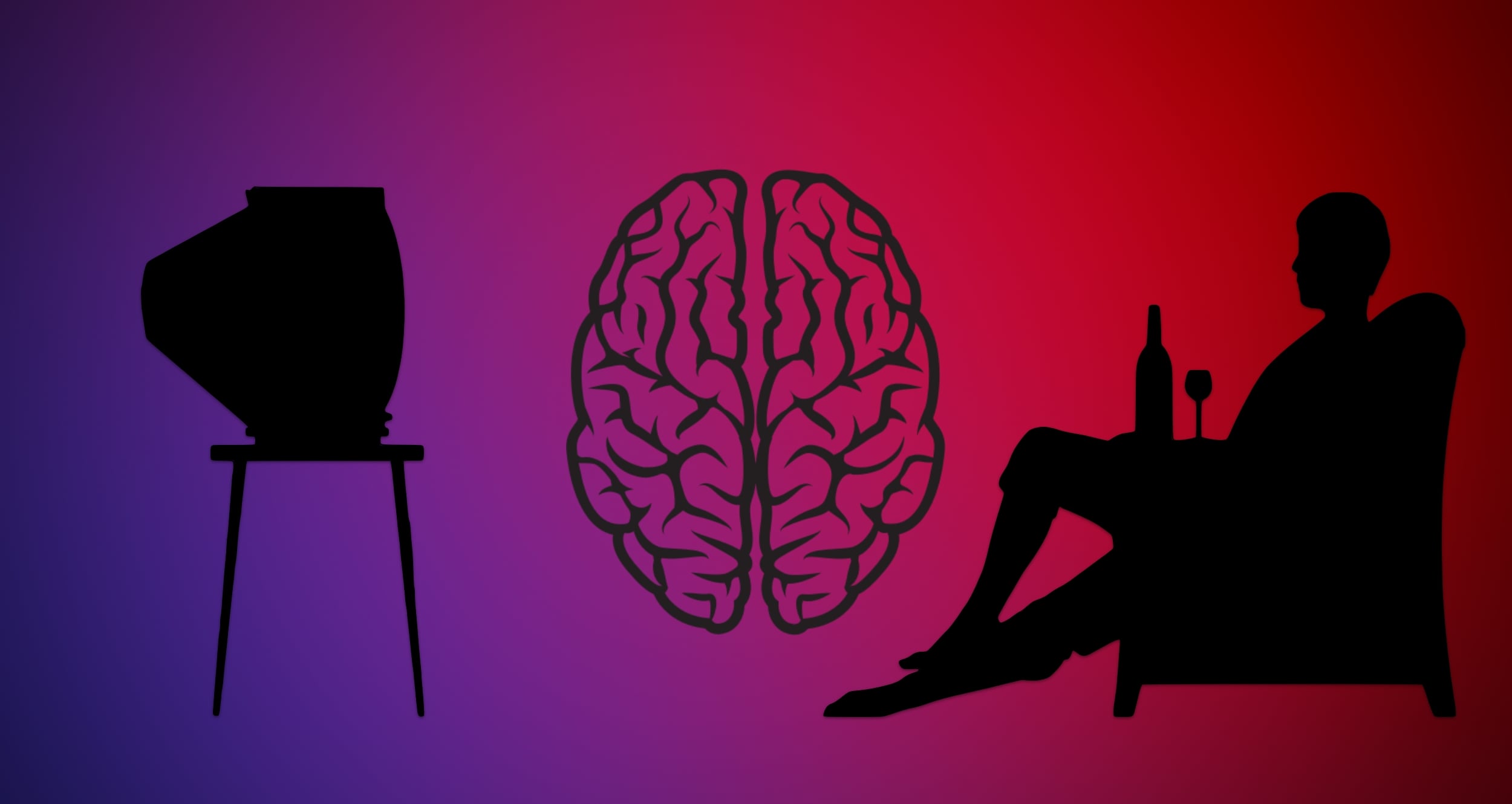
It is a Friday evening, and after a long week you settle into the couch. The television hums to life; a streaming queue stretching endlessly on the screen. One episode becomes three, three becomes six, and before long the hours have dissolved into a highly relatable, comfortable and entirely familiar glazed-over stupor where the plot barely registers and the remote has become an extension of your hand. For a moment, let us picture an alternative. Still the same couch, evening and screen; except this time you are mid-raid in Destiny 2, calling out enemy positions to your fireteam; or 200 turns deep in Civilization VII, agonising over whether to invest in military infrastructure or push for a cultural victory; or maybe you are threading your way through the twisted architecture of Elden Ring, every nerve tuned to the next ambush. Remember, this is the same couch… yet it is a radically different brain. Thus leading one to wonder: is there a link between video games & brain health?
For decades, gaming has continuously been framed as a problem: a brain-rotting, time-wasting, antisocial habit that parents, politicians, and pundits have lined up to condemn. Television and film, by contrast, have enjoyed a certain cultural respectability; they are “relaxation”, “winding down”, “a well-earned rest”. The irony, as a growing and increasingly compelling body of research now reveals, is how this narrative could be far more harmful than first thought. As it so happens, passive entertainment – the binge-watching, doom scrolling, and mindless streaming – may very well be quietly undermining long-term brain health. Whereas video games, in a rather unsurprising turn of events for the informed, may be doing the exact opposite.

Nineteen Years of Data, One Uncomfortable Truth
The latest evidence comes courtesy of a study published in the American Journal of Preventive Medicine, led by Mats Hallgren of the Karolinska Institute in Sweden and the Baker-Deakin Department of Lifestyle and Diabetes at Deakin University in Australia. The scale of the research is formidable: 20,811 adults aged 35 to 64 at baseline in 1997, tracked through Sweden’s National Patient Register and Cause of Death Register (which together capture over 80% of all diagnosed dementia cases in the country) over a median follow-up of roughly 19 years. During that period, 569 participants developed dementia.
What makes this study distinctive is the question it asked. Rather than simply measuring how long people sat for (which has been studied extensively) the researchers distinguished between what people were doing whilst sitting. They categorised sedentary time into two groups: mentally passive behaviours (watching television, listening to music without interaction) and mentally active behaviours (reading, office work, puzzles, knitting, sewing). The results were clear: each additional hour per day of mentally active sedentary behaviour was associated with a 4% lower risk of developing dementia (Hazard Ratio (HR): 0.96; 95% Confidence Interval (CI): 0.93–0.98). Replacing one hour of passive sitting with one hour of mentally active sitting pushed that figure to a 7% reduction (HR: 0.93; 95% CI: 0.87–0.99). In the partition model, which added an hour of mentally active behaviour per day whilst holding everything else constant, saw the reduction reach 11% (HR: 0.89; 95% CI: 0.81–0.97).
In the simplest of terms: it is not merely that sitting is bad for you, it is what you do with your brain whilst sitting that may profoundly shape whether the brain stays healthy decades later. As Hallgren noted in Elsevier’s press release: not all sedentary behaviours are equivalent; some may increase the risk of dementia, whilst others may be protective.
The Science Has Been Building for Years
If this were a single study making a bold claim on video games & brain health, healthy scepticism and scrutiny would be warranted. However, the Swedish findings sit within a body of converging evidence that has been accumulating for years, and the pattern is both remarkably and surprisingly, rather consistent.
In 2022, a study published in the Proceedings of the National Academy of Sciences (PNAS) by David Raichlen and colleagues at the University of Southern California examined over 146,000 UK Biobank participants aged 60 and above across roughly 12 years of follow-up. The headline numbers were stark: adults who watched four or more hours of television per day had a roughly 20% greater risk of developing dementia compared to those who watched fewer than two hours. Adults who spent one or more hours per day using a computer for leisure, on the other hand, had a 24% reduced risk. The critical detail? These associations held even after adjusting for physical activity levels. So exercise alone did not cancel out the effects of prolonged passive screen time.
A separate analysis in the English Longitudinal Study of Ageing found watching television for more than 3.5 hours per day was associated with a dose-response decline in verbal memory over six years. The researchers suggest excessive television may displace activities that are actually beneficial – playing board games, reading, engaging with cultural activities – thereby compounding the damage through sheer opportunity cost.
The throughline across all this research is simple, and it is the same one gamers have intuitively understood for years: a brain actively solving problems is a brain being exercised. Conversely, a brain passively absorbing content is a brain that is, in a very real neurological sense, idling.
So Where Does Video Games & Brain Health Fit?
This is where things get particularly interesting for anyone who has ever picked up a controller.
The Swedish study did not explicitly test video games as a variable – its 1997 baseline questionnaire predates the widespread adoption of gaming in the cohort’s age demographic. The principle it establishes, however, applies directly. Video games demand precisely the kinds of cognitive engagement the research associates with protection: problem-solving, spatial navigation, pattern recognition, rapid decision-making, strategic planning, and sustained attention. There is nothing passive about navigating a labyrinthine open world, managing civilisation-scale logistics, or reacting to dynamic combat encounters in real time. Gaming is, categorically, mentally active sedentary behaviour.
Thankfully, this notion does not need to be idly inferred. Gaming-specific research exists, and it is compelling. In 2024, a large-scale prospective study published in Alzheimer’s Research & Therapy analysed 471,346 UK Biobank participants and found a high frequency of computer gaming was associated with a 19% decreased risk of incident dementia (HR: 0.81; 95% CI: 0.69–0.94). Gamers demonstrated better performance across multiple cognitive measures – prospective memory, reaction time, fluid intelligence, numeric memory – and showed higher volumes of grey matter in the hippocampus, which is the brain region most critically implicated in memory formation and among the first to deteriorate in Alzheimer’s disease. The study also employed Mendelian Randomisation (MR), a genetic analysis method helping disentangle causation from correlation, and found a significant association between a genetic predisposition toward gaming and reduced dementia risk (Odds Ratio (OR): 0.37; 95% CI: 0.15–0.91).
Then there is the work from the National Institute on Aging (NIA) in the United States, which tested what happens when older adults – aged 60 to 80, with no prior gaming experience – play Super Mario 3D World on a Nintendo Wii U for 30 to 45 minutes per day over four weeks. The result? Significant improvements in hippocampal-based memory compared to a control group playing only Solitaire. The improvements persisted even after participants stopped playing. The researchers attributed the effect to the novelty and spatial richness of three-dimensional game environments. In other words, the game was giving the brain the kind of stimulation laboratory enrichment gives to ageing rodents.
The research and corresponding findings are incredible, especially if, for a moment, one considers how a group of people who had never touched a game controller in their lives, played a Mario game for a few weeks, and their memory measurably improved. Now consider the millions of gamers worldwide who have been engaging in far more complex, demanding, and sustained gameplay for years – through to decades – of their lives. The argument for the potentially positive nature of video games & brain health is immense.

Twenty Years of Proof
Perhaps the most striking piece of evidence comes from a study that was never designed to be about gaming at all; yet it speaks directly to its value.
The Advanced Cognitive Training for Independent and Vital Elderly (ACTIVE) trial is the largest randomised controlled trial in the United States to assess different forms of cognitive training in older adults. Its 20-year follow-up, published in February 2026 in Alzheimer’s & Dementia: Translational Research and Clinical Interventions, found participants who completed five to six weeks of adaptive “speed of processing” training – and received booster sessions one and three years later – had a 25% lower incidence of dementia compared to the control group. Of the 264 participants in the boosted speed-training group, 40% were eventually diagnosed with dementia, compared to 49% in the control arm of 491 participants.
What makes the study particularly interesting is how the mechanics of this training will sound familiar to anyone who games. Participants identified visual targets on a computer screen under time pressure, with difficulty scaling adaptively based on their performance: getting faster as they improved and adding complexity as they mastered each level. It was, in essence, a video game stripped to its core loop: perceive, process, react, and adapt. As the researchers noted, speed training drove implicit (procedural) learning rather than explicit strategy memorisation; thus participants built reflexive skills through consistent practice. This is precisely how gaming trains the brain, whereby players forgo ‘conscious study’ in favour of iterative and escalating demand of play.
Marilyn Albert, Director of the Alzheimer’s Disease Research Center at Johns Hopkins Medicine and the study’s corresponding author, described the finding as remarkable: a comparatively modest and non-pharmacological intervention demonstrating lasting protective effects across two full decades. No drug trial has achieved anything comparable and no other form of ‘entertainment media’ has demonstrated comparable results.
It Is Not Just Television Anymore
It is worth noting how the implications of this research extend well beyond the television sets of the 1990s and 2000s in which many of these cohorts were originally studied. The modern media landscape has fragmented passive consumption into a dozen new forms: binge-watching streaming services, doom scrolling through algorithmically curated social media feeds, passively consuming short-form video content on platforms designed to keep users watching indefinitely, and more. Whilst these specific behaviours were not directly measured in the longitudinal studies (whose baselines predate the smartphone era), the underlying mechanism is the same: low cognitive engagement over sustained periods. As CNN wellness expert Dr. Leana Wen noted when interpreting the Swedish study, the concern is not about screens per se; it is about prolonged periods of low-engagement behaviour. Mindless scrolling, subsequently, fits the definition perfectly.
Gaming, by contrast, is the antithesis of passive consumption. Whether a player is deciphering environmental puzzles in The Legend of Zelda: Tears of the Kingdom, coordinating real-time strategy with teammates in Helldivers 2, or making split-second resource allocation decisions in Factorio; the brain is constantly working through solving and adapting on the fly. The research, taken as a whole, increasingly suggests how this distinction in better understanding video games & brain health is not trivial and may very well be one of the most consequential lifestyle factors for long-term cognitive health.
What the Research Does Not Say
As always, one must be critical when reviewing the data, and also intellectually honest about the caveats presented.
The observational studies – Werneck et al., Raichlen et al., the UK Biobank gaming analysis – demonstrate associations, not proven causation. It is entirely possible individuals with stronger baseline cognitive function are simply more inclined to seek out mentally stimulating activities; which means some of the association may reflect a selection effect. The Swedish study’s 1997 questionnaire did not capture modern sedentary behaviours (gaming included), and it measured behaviour at a single timepoint across a 19-year window, introducing potential misclassification. The UK Biobank gaming study was also limited to White British participants, constraining generalisability. The ACTIVE trial’s speed training, whilst functionally similar to gaming, was a purpose-built research tool – not a commercial video game – and the protective benefit was only observed in participants who received booster sessions; those who completed the initial training alone saw no significant reduction.
As such, the evidence does not support the idea that any amount of any game provides blanket protection. Game type, engagement duration, and consistency all likely matter, although the precise parameters remain an open question when it comes to video games & brain health. Some studies have failed to find significant transfer effects from game training to broader cognitive measures, particularly when compliance was low. With that said, the field is still maturing and there is obviously room for additional findings and growth. In this sense, definitive randomised controlled trials testing commercial video games specifically against passive screen time, in large and diverse populations over long follow-up periods, have yet to be conducted (and hopefully they will be in time).
What the evidence does support, consistently and across multiple independent research teams with hundreds of thousands of participants, is how cognitively engaging activity – the kind gaming exemplifies – is associated with meaningfully better long-term brain health than passive consumption. This is not a small finding, and it allows for the takeaway that gaming does, in fact, have a positive effect when compared to ‘passive’ consumption of media.
The Next Time Someone Tells You to Turn It Off
The convergence of evidence is difficult to ignore. Across a 19-year Swedish cohort, a 12-year UK Biobank analysis, the largest randomised cognitive training trial ever conducted, and gaming-specific research encompassing nearly half a million participants; the message is the same: what you do with your brain whilst sitting does matter. More so, passive entertainment is increasingly associated with elevated dementia risk. Whereas active, cognitively demanding pursuits – from puzzles and reading through to computer use and gaming – are associated with protection.
Of course, none of this is a licence to abandon physical activity, sound nutrition, or adequate sleep; the research emphatically showcases how the greatest benefits come from combining mental and physical engagement. For those who have spent years defending their hobby against the accusation that it is a mindless waste of time, however, the science is increasingly unequivocal. Gaming is not rotting the brain. It may, in fact, be fortifying it.
So the next time someone suggests you put the controller down and watch something instead, you have two decades of longitudinal research, a landmark randomised controlled trial, and a growing body of neuroscience on your side for video games & brain health. After all, no one ever levelled up by watching someone else play.
Sources:
- Werneck, A.O. et al. (2026). Mentally active versus passive sedentary behavior and risk of dementia: 19-year cohort study. American Journal of Preventive Medicine. DOI: 10.1016/j.amepre.2026.108317.
- Raichlen, D.A. et al. (2022). Leisure-time sedentary behaviors are differentially associated with all-cause dementia regardless of engagement in physical activity. Proceedings of the National Academy of Sciences, 119(35), e2206931119.
- Jia, Y., Shi, M. et al. (2024). Associations of computer gaming with incident dementia, cognitive functions, and brain structure: a prospective cohort study and Mendelian randomization analysis. Alzheimer’s Research & Therapy, 16, 131.
- Coe, N.B. et al. (2026). Impact of cognitive training on claims-based diagnosed dementia over 20 years: evidence from the ACTIVE study. Alzheimer’s & Dementia: Translational Research and Clinical Interventions, 12(1), e70197.
- Clemenson, G.D. et al. (2020). Enriching hippocampal memory function in older adults through video games. Behavioural Brain Research, 390, 112667.
- Fancourt, D. & Steptoe, A. (2019). Television viewing and cognitive decline in older age: findings from the English Longitudinal Study of Ageing. Scientific Reports, 9, 2851.

Owner, founder and editor-in-chief at Vamers, Hans has a vested interest in geek culture and the interactive entertainment industry. With a Masters degree in Communications and Ludology, he is well read and versed in matters relating to video games and communication media, among many other topics of interest.
- Hans Haupthttps://vamers.com/author/hanshaupt/

- Hans Haupthttps://vamers.com/author/hanshaupt/

- Hans Haupthttps://vamers.com/author/hanshaupt/

- Hans Haupthttps://vamers.com/author/hanshaupt/

- Hans Haupthttps://vamers.com/author/hanshaupt/

- Hans Haupthttps://vamers.com/author/hanshaupt/

- Hans Haupthttps://vamers.com/author/hanshaupt/

- Hans Haupthttps://vamers.com/author/hanshaupt/