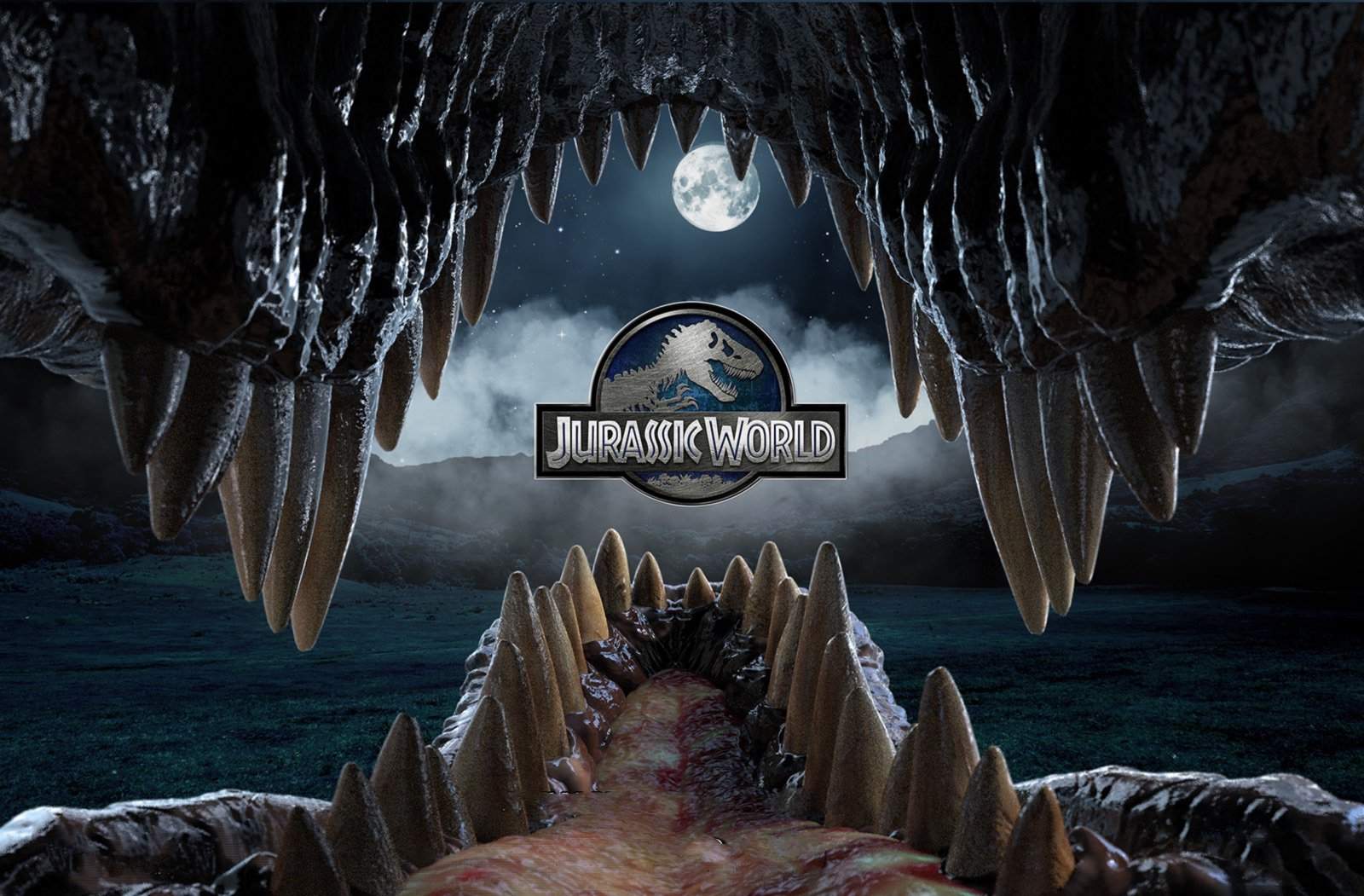
Jurassic World Rebirth opens with one of the most ludicrous and baffling text-crawls ever seen in a piece of blockbuster world-building. Thirty-two years after dinosaurs were resurrected from extinction – an act constituting, by any reasonable measure, the most significant scientific achievement in human history – the film declares public “interest has waned”. The film insists no one cares about dinosaurs anymore. These relics of the past are now yesterday’s news and a novelty whose shine has worn off. It is a premise so thoroughly disconnected from observable reality – so fundamentally at odds with everything we know about how human beings respond to large, magnificent, and genuinely extraordinary animals – it deserves to be examined not merely as a narrative misstep, but as evidence of a creative team who have misunderstood what makes Jurassic Park dinosaurs captivating in the first place.
Director Gareth Edwards, speaking to GamesRadar+, defended the decision as an “honest beginning”, arguing audiences need “something new and fresh” to justify another dinosaur film. He even drew a metaphor between waning public interest in dinosaurs and the decline of cinema attendance in the streaming era. The comparison is revealing because it exposes a profound misreading of the relationship between wonder and familiarity. Audiences are not tired of Jurassic Park dinosaurs (they never have, nor will they ever be). No, they are tired of films treating dinosaurs as anything but awe inspiring.
A $22 Billion Counter-Argument
If Rebirth’s premise was accurate – if prolonged exposure to extraordinary animals genuinely eroded public interest – the global zoo and aquarium industry would have collapsed centuries ago. Yet, according to Statista, the worldwide zoos and aquariums market is projected to reach US$22.67 billion in revenue in 2026, with steady growth forecast through to 2030. Better still, the World Association of Zoos and Aquariums (WAZA) reports more than 700 million annual visits globally. In the United States alone, AZA-accredited facilities record over 180 million visits each year; whereas on the other end of the globe, Tourism Research Australia indicates how over 2.7-million trips are recorded per year, generating over $4-billion in revenue (impressive for a country with a population of only 25-million people). These are staggering numbers, and they are generated by – in the kindest possible framing – somewhat familiar creatures.
Consider what these institutions offer: animals humanity has known about, studied, and coexisted with for millennia. Nobody visits the Kruger National Park and sighs at the sight of an elephant (an animal existing since before the Pleistocene) or feigns ennui at the spectacle of a giraffe (an animal whose proportions, it is worth noting, are genuinely absurd and would seem invented were they not observable in person). Similarly, no one walks through an aquarium and declares jellyfish passé courtesy of these delightful creatures having drifted through oceans for 500 million years (an animal whose lack of a brain, heart, or blood, it is worth noting, makes the giraffe’s absurd proportions seem almost sensible by comparison). Whether it is a great white shark gliding past reinforced glass, or the simple charm of watching meerkats stand sentinel at a suburban zoo, through to the annual migration of millions of wildebeest across the Serengeti; the appeal of encountering extraordinary animals does not diminish through mere repetition or time. Seeing these glorious creatures always evokes a primal response; one rooted in something far deeper than novelty. It is where awe and wonder appear on full display; the wild brought forth for the meek to revere.
The wonder of these living animals consistently draws interest to the human imagination, and all this from “familiar creatures” in controlled settings. Jurassic Park dinosaurs – resurrected from a 66-million-year absence through the most audacious feat of genetic engineering imaginable – would be something else entirely. The idea they would generate any less interest is, on its face, utterly ridiculous.
Why Jurassic Park Dinosaurs Sit Atop Every Hierarchy of Wonder
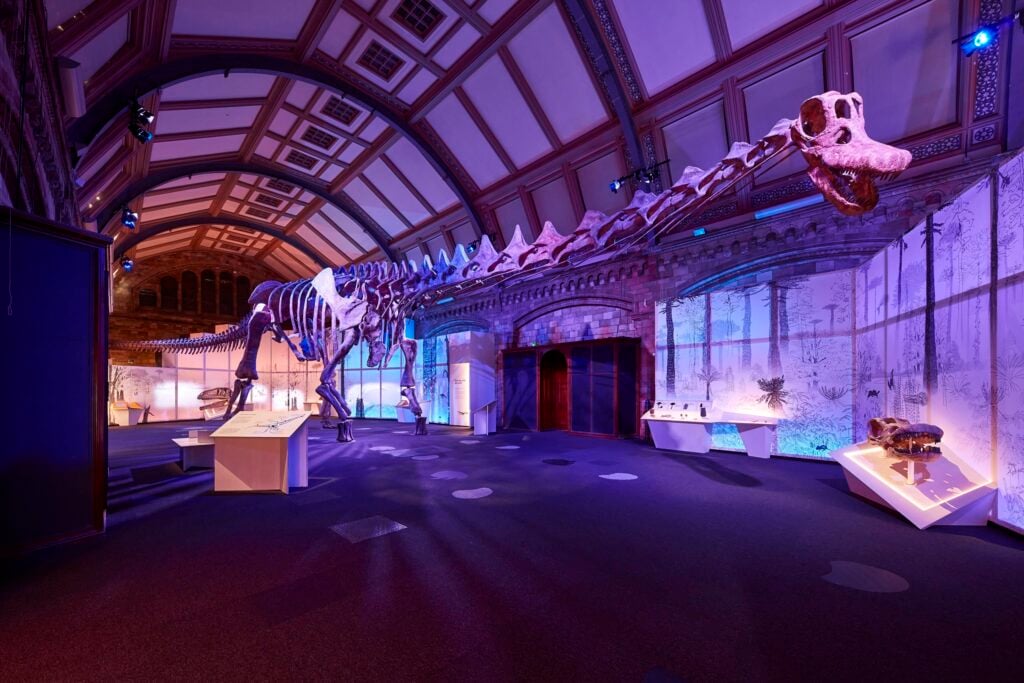
There is a useful thought experiment here, and it involves working up from the lowest possible tier of dinosaur experience in order to better understand what the real thing would be like. At the bottom of this hierarchy sit fossilised bones in museum halls: static, silent, and often incomplete. Yet the Natural History Museum in London welcomed over 6.4 million visitors in the 2020 to 2025 period, with its Titanosaur exhibition – featuring a 2.67-tonne cast of Patagotitan mayorum: the largest and most complete dinosaur ever discovered – drawing in well over 345 000 visitors alone, becoming the museum’s most popular paid exhibition in over 20 years. Keep this in mind, given how these are bones and casts on display; static and lifeless replicas of creatures who last drew breath some 60 million years ago. Even so, people continue to queue to see these ancient relics. Further to this point, when the Burpee Museum of Natural History acquired a juvenile Tyrannosaurus rex specimen nicknamed Jane, attendance nearly quintupled. The museum’s director described dinosaurs as possessing a “universally appealing” quality transcending age and background.
If a plaster reconstruction of a Patagotitan and a complete skeleton of a young Tyrranosaur can drive record-breaking attendance numbers at popular museums, what exactly would living, breathing Jurassic Park dinosaurs do to public interest?
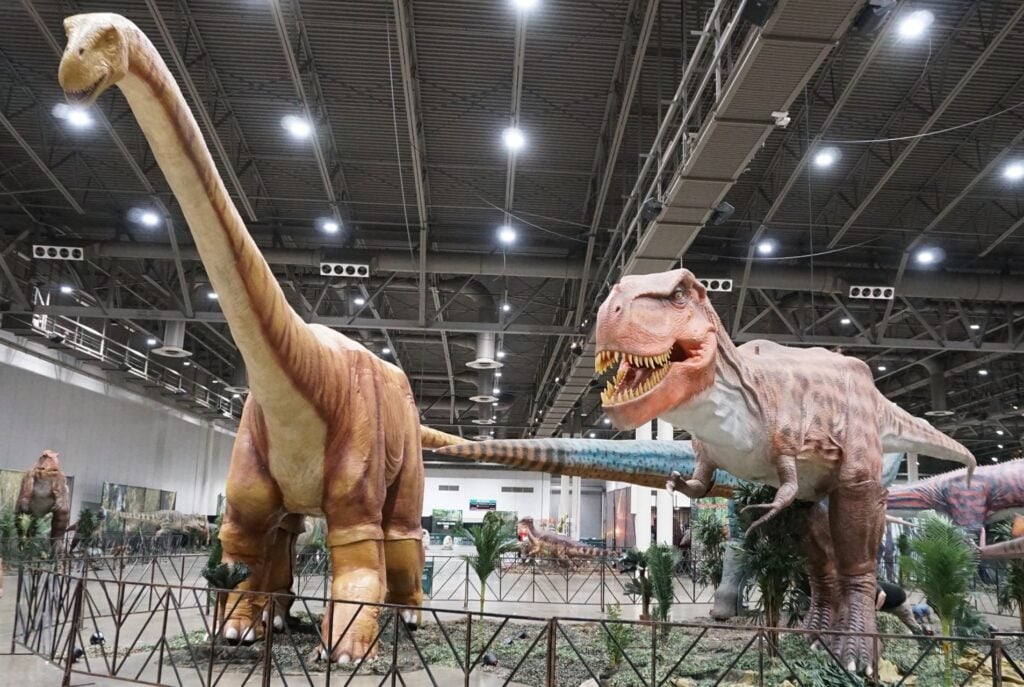
Going one step up the hierarchy brings us to animatronic exhibitions – rubber and steel simulacra with motorised jaws and pre-recorded roars. Jurassic Quest, North America’s largest touring dinosaur experience, has welcomed over 10 million visitors since 2013; by 2023, it was running three concurrent tours across more than 250 cities across the globe, selling over 1.8 million tickets annually. Then when Reid Park Zoo in the USA hosted Dinosaurs Around the World (a travelling animatronic exhibit), attendance surged 30 per cent. Time slots regularly sell out and the demand is so robust, the company has since expanded into a broader entertainment group – courtesy of the insatiable public appetite for anything even vaguely prehistoric. Last, but certainly not least, is Universal Entertainment’s very own Jurassic World Exhibition, a world touring movie and animatronic experience which has enjoyed over five-million visitors since opening in 2019 (the simple irony of the success of this event should not be lost on anyone).
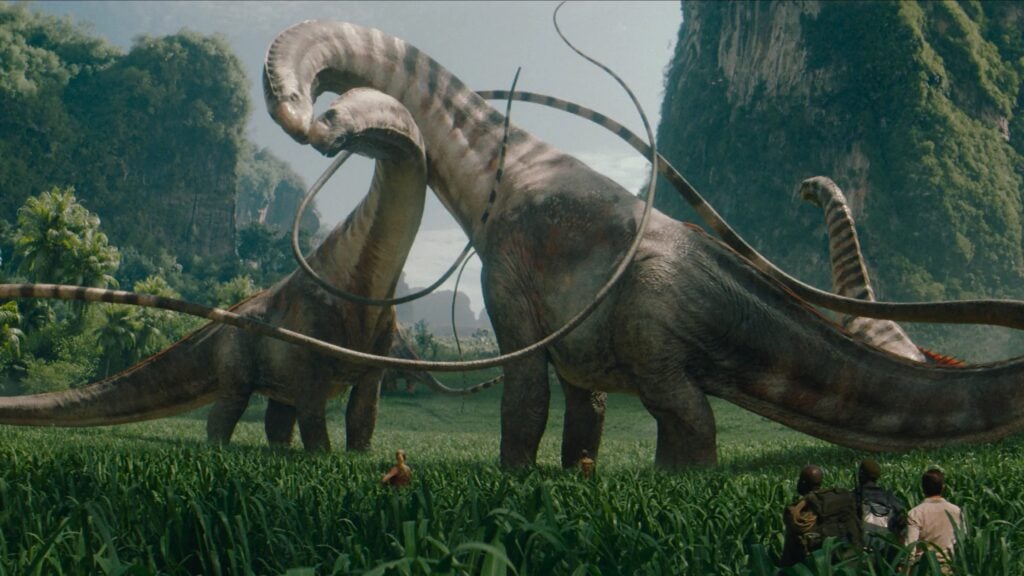
So what sits at the top of this hierarchy? At this point in time, the imagination of the impossible: real-life, living, breathing Jurassic Park dinosaurs. Creatures that hunt, move, have intelligence behind their eyes, and proceed to possibly shake the ground beneath one’s feet. If fossilised bones can sustain a US$20+ billion museum sector, and rubber facsimiles can sell out across cities around the world on a yearly basis; the premise people would lose interest in the real thing is, matter of factly, implausible.
The Scientific Dimension Nobody Mentions
Rebirth’s premise also ignores an entire dimension of interest the film merely mentions in passing: science. In its universe, living dinosaurs exist; they can be studied, observed in real-time, and compared against decades of palaeontological inference built from fragmentary fossils and educated guesswork. The research opportunities – from biomechanics and metabolic physiology through to evolutionary biology, ecology, and ethology – would sustain entire academic disciplines for centuries. Universities would build departments around them, and governments would fund conservation programmes to protect them. The pharmaceutical angle Rebirth introduces (harvesting dinosaur blood to cure heart disease) inadvertently proves the point: if these animals hold medical breakthroughs in their biology, they are not merely interesting, they are invaluable.
Naturally, the notion scientific establishments would lose interest is as absurd as the idea the general public would. It is the equivalent of suggesting astronomers would grow bored of studying the observable universe because it has been around for a while.
Playing Devil’s Advocate… And Why It Still Fails
To be fair to Universal, Edwards and Koepp, there is a version of this premise which, given some additional time to bake, could have worked. The notion of wonder being eroded through overexposure is not unbelievable. In fact, it could be argued how it is one of the novel central themes from the original Jurassic Park. After all, John Hammond’s park fails precisely because its architects treat miracles as commercial products; with the lesson being how the commodification of wonder strips it of meaning. Conversely, it may be argued how the first Jurassic World did try to offer commentary on a world grown accustomed to living dinosaurs, and thus attempted to process this loss of awe through the need to ‘make something more’ like the Indominus Rex (always needing something ‘new’ to keep people interested). Although Rebirth hints at answering what happens when miracles become mundane, it never sticks the landing in what could have been a genuinely compelling narrative and exploration of a juicy allegory.
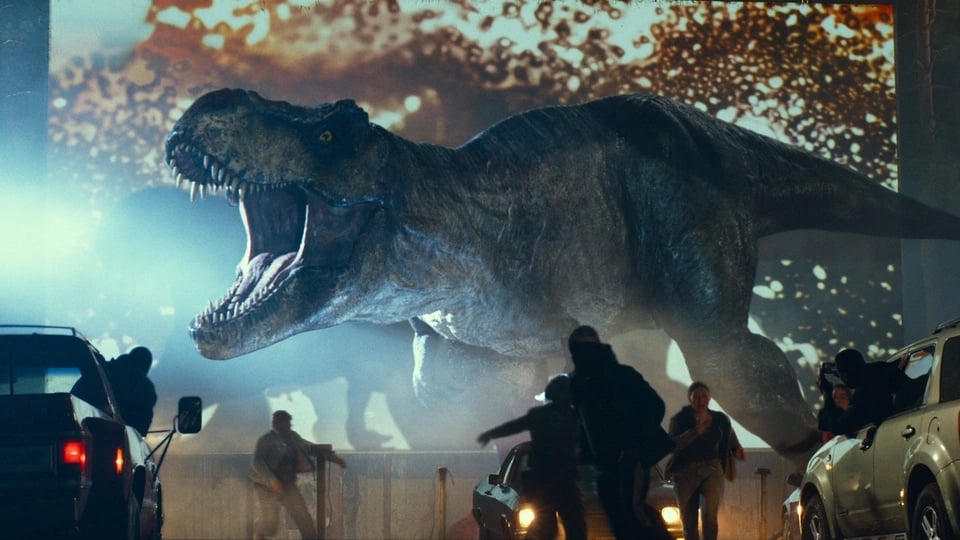
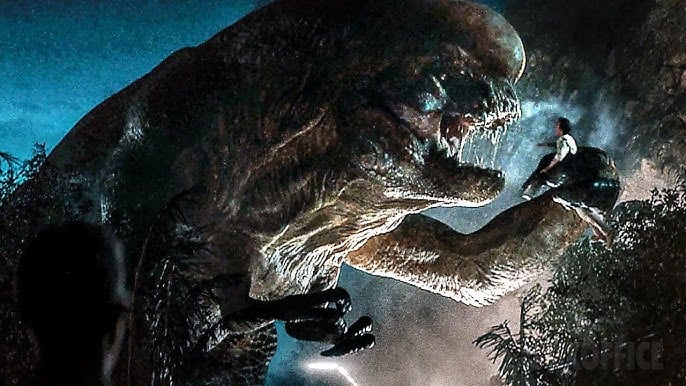
What Rebirth does do is announce dinosaurs as boring, then proceeds to make a conventional action film in which characters are chased by unconventional and unique dinosaurs who are plainly still terrifying, magnificent, and more than capable of generating enormous set pieces. The idea of a secret island where the original dinosaurs were created, with some unique mutations occurring before the final ‘specimens’ were released in the commercial park, is pretty much ignored. There is no further exploration of the incredible science that brought these creatures into existence, or the plight of the scientists through every step and breakthrough. Instead, the ideas are relegated to turning one of the most unusual in-world scientific miss-steps into nothing more than a ‘monster’ to scarcely support a campy adventure with no real substance. The lack of exploration of what could have been incredibly interesting goes hand in hand with the absence of commentary on the loss of awe and wonder.
The Irony of $869 Million
There is a rich irony – bordering on the farcical – in a film about dinosaurs being regarded as ‘boring’, which then proceeds to gross US$869 million worldwide. Jurassic World Rebirth opened to US$322.6 million globally – the biggest worldwide opening of 2025 at the time – and became the sixth-highest-grossing film of the year. People are, demonstrably and measurably, still interested in Jurassic Park dinosaurs. Even if the films no longer treat the creatures with the reverence they so dearly deserve.
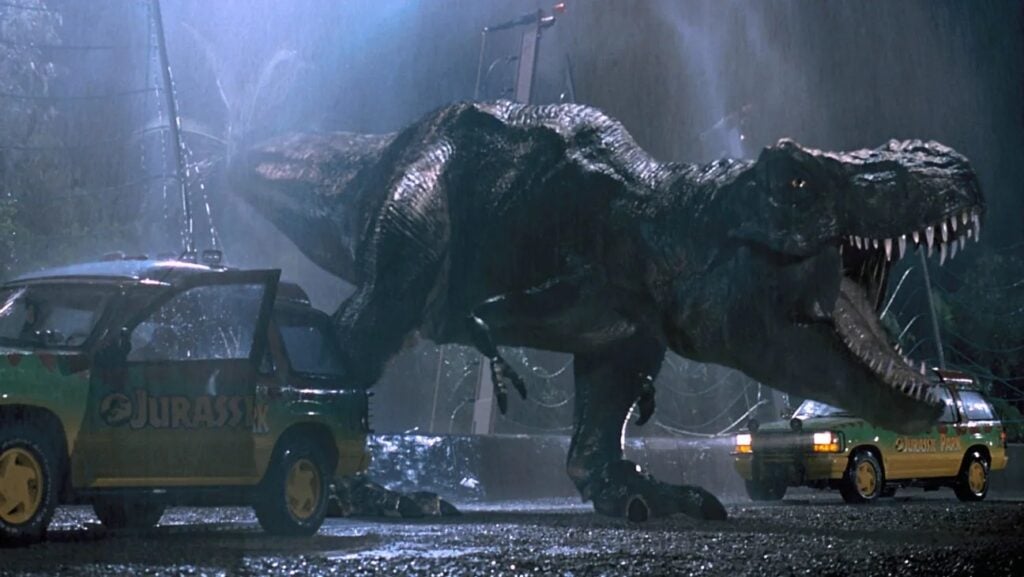
The original Jurassic Park – directed by Steven Spielberg and written, in part, by the very same David Koepp who penned Rebirth – understood something this sequel does not: the sight of a living dinosaur is intrinsically awe-inspiring, and the filmmaker’s job is not to explain why audiences should care, but to create conditions in which caring is inevitable. Spielberg lingered on moments within the original film to do exactly this. He let Dr Alan Grant and Dr Ellie Sattler’s astonishment do the narrative work; he trusted John Williams’ score to carry the emotional weight, all whilst the visuals served to enhance the wonder of ‘what could be’ (even if it did go pear shaped in the end).
Rebirth, by contrast, opens by informing the audience this wonder has expired – then spends its runtime trying to generate the very emotion it has already disavowed. The result is a film at war with itself: action sequences straining for tension the screenplay has pre-emptively deflated; characters marvelling at creatures the narrative insists are unremarkable; and a climactic threat in the Distortus Rex whose name alone suggests the creative process might have needed some more time. In so doing, the film surrenders its most powerful asset before the title card has even appeared.
A Franchise at War with Its Own Premise
Are Rebirth’s other failings symptoms of the “boring dinosaurs” foundation rather than independent problems? Not entirely, but it does form a large part of the reason why people have found issue with the film’s overall narrative. In short, the film suffers from poorly drawn characters who oscillate between reckless incompetence and plot-convenient heroism; a bifurcated narrative which never coheres into a single compelling through-line (the Delgado family subplot, in particular, feels as though it was grafted on from an entirely separate production); and a tone unable to decide whether it is paying earnest homage to its 1993 progenitor or sleepwalking through contractual obligation (certainly feels like the latter).
Ultimately, the “waning interest” premise is the foundation upon which all of these other problems rest – the proverbial load-bearing wall of Rebirth’s lazy narrative architecture constructed from nothing more than a used Snickers Bar wrapper (IYKYK). By establishing from the outset Jurassic Park dinosaurs are no longer remarkable and in need of ‘something else’ to be ‘amazing’ again, the film robs itself of the very quality that has sustained this franchise for over three decades: wonder. Without wonder, what remains is spectacle without substance; action sequences in search of reasons to exist; and set pieces functioning as technical demonstrations rather than emotional experiences. As such, the film becomes a paradox: a US$180 million argument about how its own subject matter is no longer worth caring about.
Edwards’ metaphor about cinema’s struggle for relevance in the streaming era is, in this sense, more revealing than he perhaps intended. The problem with modern blockbusters is not about audiences having grown tired of spectacle, per se; it is rather how too many films mistake spectacle for storytelling. Spielberg’s Jurassic Park was a meditation on hubris, responsibility, and the terrifying beauty of the natural world. Rebirth treats its dinosaurs as set dressing for a heist plot, which barely makes internal sense (harvesting dinosaur blood to cure heart disease is, even by franchise standards, a considerable stretch), then has the audacity to suggest the audience shares its indifference.
Wonder Is Not a Finite Resource
The global zoo industry generates billions annually through exhibiting none-extinct animals – mostly those humanity has always lived alongside. Then there are animatronic dinosaur shows selling millions of tickets to see rubber facsimiles of creatures that perished long before our species even existed. Museum exhibitions featuring fossilised bones draw record-breaking crowds, decade after decade. Lastly there is the Jurassic Park/World film franchise consistently grossing over hundreds of millions of Dollars worldwide, from audiences who (the film rather boldly asserts) are no longer interested in the very thing they bought tickets to see.
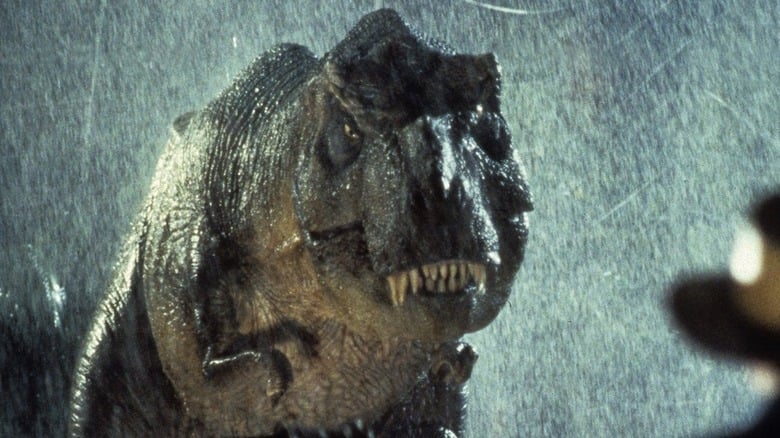
Jurassic Park dinosaurs are not boring. They have never been uninteresting, and they will not become tiresome in thirty-two years, or another sixty million from now. Spielberg understood how wonder is not a finite resource to be depleted through exposure; rather it is more a response to genuine artistry, to the careful and considered presentation of something magnificent and awe inspiring. The original film succeeded not only because audiences had never seen a ‘living’ dinosaur before – no, it flourished because Spielberg made viewers feel as if they were doing so for the first time. Hopefully Universal Pictures takes notes for what comes next because the answer is simple: more awe and wonder; less illogical cynicism, audacious camp and unnecessary mutations.

Owner, founder and editor-in-chief at Vamers, Hans has a vested interest in geek culture and the interactive entertainment industry. With a Masters degree in Communications and Ludology, he is well read and versed in matters relating to video games and communication media, among many other topics of interest.
- Hans Haupthttps://vamers.com/author/hanshaupt/

- Hans Haupthttps://vamers.com/author/hanshaupt/

- Hans Haupthttps://vamers.com/author/hanshaupt/

- Hans Haupthttps://vamers.com/author/hanshaupt/

- Hans Haupthttps://vamers.com/author/hanshaupt/

- Hans Haupthttps://vamers.com/author/hanshaupt/

- Hans Haupthttps://vamers.com/author/hanshaupt/

- Hans Haupthttps://vamers.com/author/hanshaupt/