
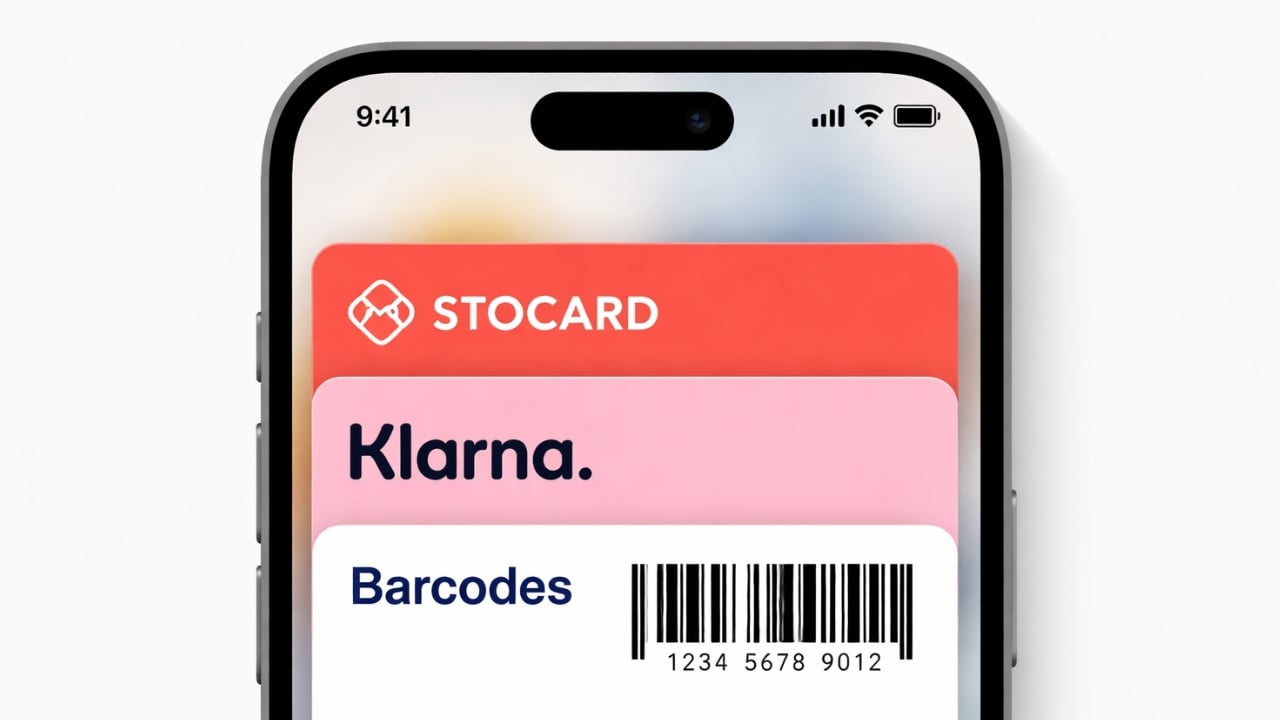
It is never a surprise when a large company fumbles an acquisition. The playbook is practically a genre unto itself at this point: acquire a beloved product, absorb it into a bloated ecosystem, strip away the features users actually cared about, and then act bewildered when the community revolts. Klarna, the Swedish fintech giant best known for its “buy now, pay later” services, has followed this script to the letter with its acquisition of Stocard. The subsequent fallout has, to be blunt, been nothing short of predictable.
For those unfamiliar, Stocard was a brilliantly simple application. It allowed users to digitise their physical loyalty and rewards cards into a single, easy to use and clean interface. Scan the barcode, store the card, and never fumble through a wallet at the till again. The application was free, intuitive, and – crucially – it supported Apple Watch. For anyone who has ever stood in a queue at a supermarket, wrist raised, watching a cashier scan a barcode directly from their watch, the convenience was borderline revelatory. It was, for many, the single best reason to own an Apple Watch beyond fitness tracking.
Klarna acquired Stocard back in July 2021, at which point the application boasted over 49 million active users across 25 markets. On paper, the acquisition made strategic sense. Klarna wanted to integrate loyalty card functionality into its broader shopping and payments platform, creating a one-stop digital wallet experience. In practice, however, the transition has been an unmitigated disaster.

A Migration Marred by Failure
When Klarna finally pulled the plug on the standalone Stocard application, users were given a narrow window of about two weeks to migrate their cards over to the Klarna app. The process was supposed to be seamless, yet ended up being anything but.
Reports flooded Apple Community forums, Reddit, and MacRumors with accounts of migrations failing outright – I was victim to this exact issue. Some users encountered persistent “technical error” messages when attempting the transfer. Others found the Stocard application simply stopped responding before the official shutdown date, locking them out of their cards entirely. The confirmation emails required for Klarna account creation also had absurdly short expiry windows (sometimes as little as 60 seconds) while the emails themselves took upwards of ten to twenty minutes to arrive. The result was a Kafkaesque loop of expired links and inaccessible cards.
Perhaps most frustrating of all, Klarna forced users to create entirely new accounts. Stocard had operated on a simple, low-friction model where account creation was optional. Klarna, by contrast, demanded full onboarding into its financial services platform just to access a handful of loyalty cards (it is as ridiculous as it sounds). For users who had zero interest in “buy now, pay later” schemes, being conscripted into a fintech ecosystem simply to scan a Woolworths Rewards card felt like an insult.
The Unforgivable Sin: No Apple Watch Support
Botched migrations are frustrating, but recoverable. Users can, with enough patience, re-enter their card details manually and overtime restore what was once lost. What cannot be recovered, however, is functionality the new platform simply does not offer.
Klarna does not have an Apple Watch application for loyalty cards.
For just a moment, let the weight of this sink in. One of the most beloved features of Stocard – the ability to raise one’s wrist and have a barcode scanned in seconds – was completely abandoned. Klarna offered no replacement, workaround, or timeline for implementation. Sure, it could be argued that a feature like this is more for power users. However, it makes zero sense to move over users who have enjoyed such functionality, to a new app without it. It is literally less convenient for customers, hence the ‘unforgivable’ nature of this simple omission in functionality.
As a result, community sentiment has been overwhelmingly negative. The App Store reviews for Klarna are peppered with former Stocard users lamenting the downgrade. The privacy implications have also drawn scrutiny: Stocard’s data collection was minimal, whereas Klarna’s privacy scorecard reveals significantly more aggressive data harvesting (seriously, they clearly want to track everything). It goes without saying how this is very much an unwelcome trade for users who simply wanted to store, for example, a gym membership barcode.
The Alternative: Barcodes by Small Colossus
Fortunately, a myriad of alternatives do exist, but not all are created equal. In this sense there is one, in particular, that is not merely adequate, but arguably superior to Stocard, and matching or surpassing many of the other alternatives currently available.
Barcodes: Loyalty Card Wallet, developed by independent studio Small Colossus LTD, is a privacy-focused loyalty card wallet for iOS. The application does everything Stocard did, and then some, without the baggage of a fintech conglomerate looming over it.
The core functionality is straightforward: scan or import barcodes from the camera or photo library, store them in a clean digital wallet, and access them across all Apple devices via iCloud sync. There is even Apple Wallet support for those who want to keep things extra minimalist, although this is currently ‘experimental’. No account creation is required and no personal data is harvested (other than diagnostics for crashes and some usage data for how the app functions).
Even on the free tier, there are no advertisements cluttering the interface – a breath of fresh air in the current landscape of apps. Better still, the application stores everything locally on the device and syncs through iCloud, meaning user data never touches a third-party server.
Critically, Barcodes supports Apple Watch. The companion application allows users to access their loyalty cards, gym membership tags, and QR codes directly from their wrist. This is precisely the functionality Klarna so carelessly discarded. Home screen and lock screen widgets are also available, making card access as frictionless as it ever was under Stocard.
The pricing model deserves mention as well. Barcodes offers a free tier allowing users to store three cards permanently, including full Apple Watch and Apple Wallet integration. For unlimited card storage, users can opt for either a modest subscription or a one-time lifetime purchase. There are no predatory pricing structures, hidden upsells, or pressure to adopt financial services no one never asked for. It is a model built on respect for the user rather than viewing them as a means to improving shareholder value.
Additional features include customisable card colours and brand logos, folder organisation for grouping cards, iCloud-based sharing with family or friends, the ability to add cards directly to Apple Wallet with optional location awareness, and FaceID or TouchID locking for added security. The application is actively maintained, with version 2.0 introducing folders, branded cards, iCloud sharing, custom sorting, and a refreshed watch interface. It is, without a doubt, one of the absolute best applications in this category on the Apple App Store.

The Broader Lesson
The Stocard saga is a cautionary tale repeated across the technology industry with depressing regularity. When a company acquires a product, it inherits not just the technology, but also the trust of its user base. Klarna treated Stocard’s 49 million users as leads to be funnelled into a payments platform rather than as a community to be served. The loss of Apple Watch support was not an oversight. Rather, it was a clear and loud statement of priorities, which clearly do not include the users.
For anyone still mourning the loss of Stocard, Barcodes: Loyalty Card Wallet is the absolute answer. It is faster, more private, even more feature-rich on Apple Watch, and built by an independent developer who appears to care about the product rather than the quarterly earnings call. Sometimes the best technology comes not from the companies with billions in funding, but from the small studios willing to solve a problem properly.

Owner, founder and editor-in-chief at Vamers, Hans has a vested interest in geek culture and the interactive entertainment industry. With a Masters degree in Communications and Ludology, he is well read and versed in matters relating to video games and communication media, among many other topics of interest.
- Hans Haupthttps://vamers.com/author/hanshaupt/

- Hans Haupthttps://vamers.com/author/hanshaupt/

- Hans Haupthttps://vamers.com/author/hanshaupt/

- Hans Haupthttps://vamers.com/author/hanshaupt/

- Hans Haupthttps://vamers.com/author/hanshaupt/

- Hans Haupthttps://vamers.com/author/hanshaupt/

- Hans Haupthttps://vamers.com/author/hanshaupt/

- Hans Haupthttps://vamers.com/author/hanshaupt/