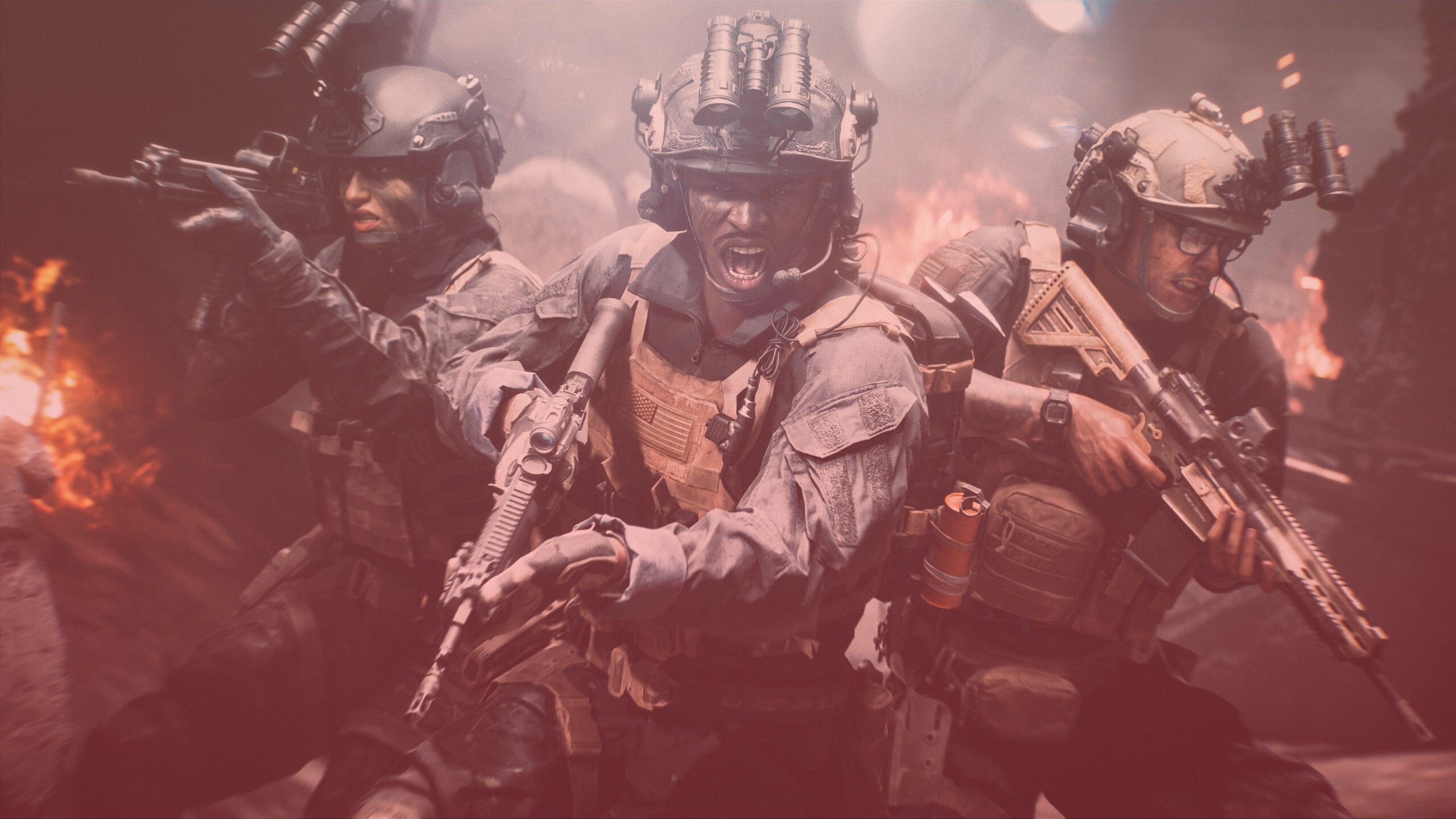
Battlefield is a troubled, if cool, franchise that has managed to stand against time despite the tests thrown at it. After the missteps of Battlefield 2042, DICE’s latest effort arrives burdened with supposition, yet succeeds with aplomb in terms of managing expectations. Battlefield 6 is a game built on both apology and ambition, determined to remind long-time players what made this series a cornerstone of large-scale shooters. It does not attempt to reinvent the genre. Instead, it rebuilds, restores, and refines; and for the most part, that approach works. What emerges is a confident and carefully tuned return to the franchise’s roots, even if it occasionally feels hesitant to take real risks.
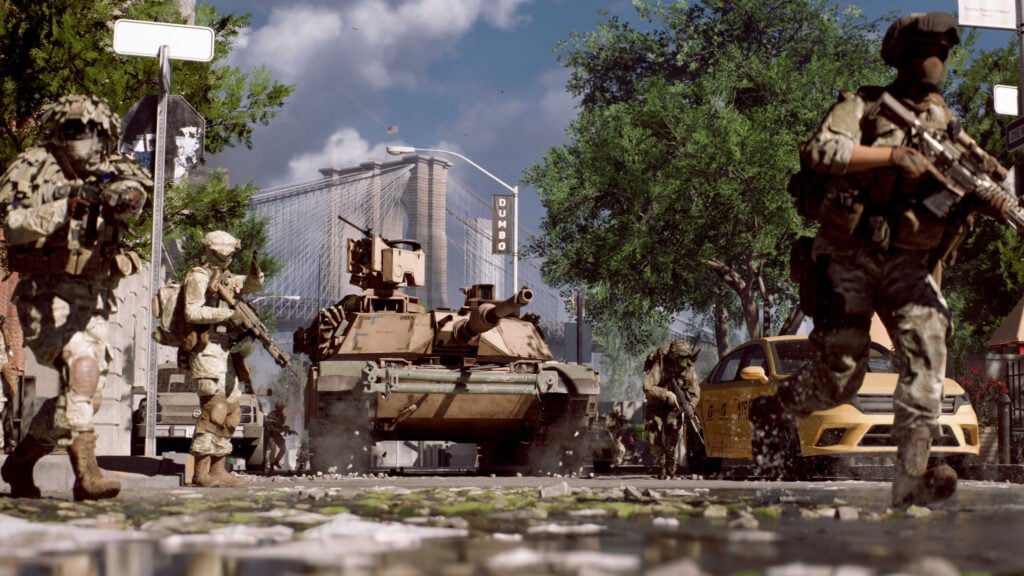
Perhaps one of the best observations is how Battlefield 6 feels unmistakably familiar from the onset. The class system has returned in full, bringing back the distinct roles of Assault, Engineer, Support, and Recon. A decision, which alone, reshapes the rhythm of combat. Each class has a clear identity, encouraging squads to coordinate and specialise rather than improvising with an endless spread of gadgets. The result is a more disciplined and team-focused experience, standing in stark contrast to the chaos of 2042.
The maps reinforce this sense of direction. Mirak Valley and the reimagined Operation Firestorm exemplify DICE’s strengths: vast, multi-layered battlefields evolving dynamically as destruction and weather reshape the terrain. Matches stretch across rolling hills, industrial complexes, and dense urban blocks, each corner alive with the sound of warfare. The balance between infantry and vehicle play is particularly strong too. Tanks dominate open terrain, but well-organised infantry can reclaim the space with clever positioning and anti-armour coordination. It feels like classic Battlefield again – fast, furious, and grounded in teamwork.
However, map design also shows occasional unevenness. Some arenas channel players a little too directly into choke points, producing frantic but predictable battles. Others sprawl beautifully, yet lack the mid-range skirmish spaces that once defined the franchise’s best layouts. These are quibbles rather than failures, but they hint at a design philosophy more focused on stability than experimentation.

Shooting is a large part of the gameplay – naturally – and the good news is that it is satisfying, although not flawless. Weapons carry convincing recoil and feedback, with a solid weight behind each shot. Time-to-kill feels brisk without being punishing, allowing skilled players to shine while leaving room for tactical recovery. Alas, it is clear weapon balance and hit registration still need some refinement. Certain weapons feel inconsistent, and the occasional firefight can end with a sense that luck, rather than accuracy, decided the eventual outcome.
Gunplay aside, movement also has a few awkward edges. The controversial quick-turn mechanic, while responsive, feels unnecessarily exaggerated and can disrupt immersion. Yet these are relatively minor blemishes in an otherwise well-tuned system. The fundamentals are far stronger than they were at 2042’s launch, suggesting DICE has finally re-established the technical baseline it lost in 2021.
Few developers capture the atmosphere of battle quite like DICE. Battlefield 6 continues the legacy with breathtaking technical polish. Audio design is especially outstanding as distant artillery thunders like an oncoming storm while debris scatters realistically, and the mechanical growl of a tank’s engine can be felt as much as heard, thanks to excellent sound engineering. Working in tandem with sound, however, comes a bevy of graphical upgrades all of which would make 2042 turn to shame. Dynamic lighting, particle effects, and detailed textures combine to produce a world that feels tangible and weighty, albeit with textures loading a little bit slow and backdrops that might sometimes feel a tiny bit less alive than they ought to (both facets, however, DICE has been known to improve as their games age).
Destruction, which is a long defining feature of the series, finds its sweet spot with Battlefield 6. Buildings collapse convincingly, but not extravagantly, striking a balance between spectacle and strategy. Meanwhile, breaching walls or detonating charges to alter sight lines never loses its thrill, and it introduces genuine tactical variety. It is a reminder of how Battlefield’s magic lies not in scripted set-pieces, but in unscripted chaos.

On the topic of scripts, one will be remiss not to mention the balls-to-the-wall singleplayer campaign featured in DICE‘s latest military blockbuster… and a spectacle it most assuredly is. While military shoot ‘em ups like Battlefield and Call of Duty are not going to be seeing any narrative awards any time soon, DICE have made a compelling effort in pushing the boundaries of what it means to tell a story in a world dominated by guns, money, and an infinite amount of racketeering.
While the narrative jumps around between protagonists from different backstories, the core story (and its nine main missions) is told through the eyes of Dagger 13. They are a group of elite Marine Raiders whose sole mission is to stop an insurgent private military organisation called Pax Armata from, essentially, taking over the world.
Without spoiling too much, it is a compelling narrative that allows anyone, from franchise newbie through veteran, to enjoy around ten hours (maybe fewer if you play better than me) of uninterrupted military shooter storytelling where the stakes actually feel like they mean something – a feat that has not been duplicated since Battlefield 3.
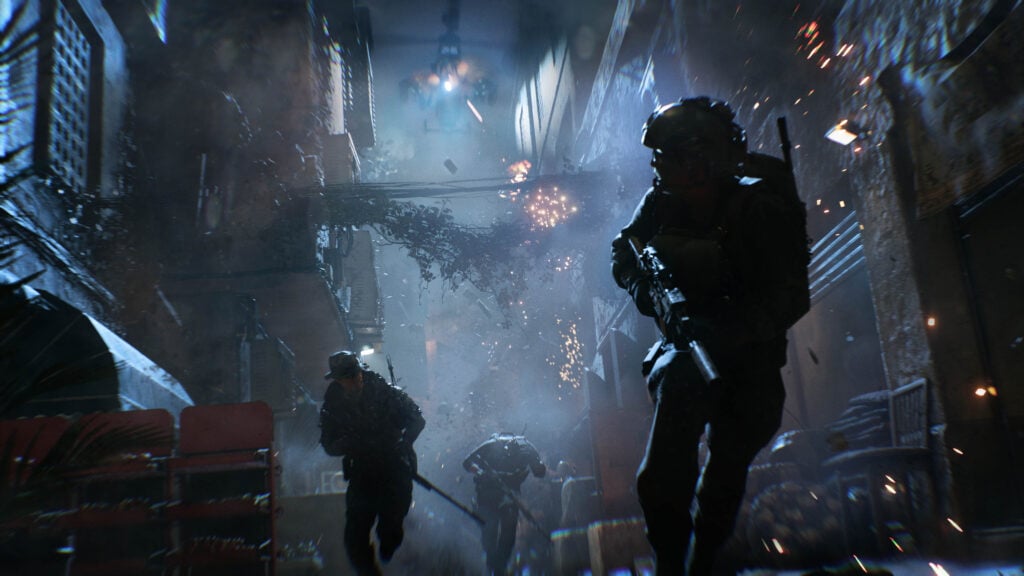
A captivating campaign can only do so much if the performance of the title leaves something to be desired. After 2042’s troubled launch, DICE has clearly invested in stability and optimisation. Frame rates remain consistent across large matches, and crashes or severe glitches are rare (a single crash was experienced on PC during the review period). The absence of ray tracing may disappoint those with high-end systems, but the trade-off is a smoother, more reliable experience for everyone. With that said, the game still features advanced ray-trace adjacent features, such as frame generation and anti-lag rendering. For a game of this scale, it is a very welcome compromise.
Where Battlefield 6 succeeds in execution, it sometimes falters in imagination. It is, without question, a return to form – but also a return to safety. The core design choices are conservative, prioritising reliability over risk. There are few surprises, and even fewer attempts to redefine what a Battlefield game can be. It is clear Battlefield 6 has been built as a platform for ongoing support. The early roadmap outlines seasonal updates, new maps, and regular balancing patches. That live-service approach could sustain the game’s momentum – provided DICE maintains its current level of responsiveness. If future updates continue to refine gunplay and expand map variety, Battlefield 6 could grow into one of the strongest entries in the series’ modern era. The potential is certainly present.

Battlefield 6 is not revolutionary, nor does it attempt to be. Rather, it is a measured reclamation of what once made the franchise great and offers a return to form that values stability and refinement over risky innovation. The restored class system brings much-needed clarity, while the scale and spectacle reignite the series’ trademark intensity. Despite some balance hiccups, floaty firefights, and moments of creative restraint, these rough edges never truly obscure the fact that Battlefield 6 delivers a genuinely satisfying experience. It may not redefine the genre, but it once again earns the right to call itself ‘home’ to all-out war.
Verdict:
GOOD [4/5]
| PROS | CONS |
| Fast paced | Plays it too safe |
| Grounded military shooter action | Weapons need some rebalancing |
| Excellent Performance | |
Title reviewed on PC (Steam) with code supplied by the publisher.
Review Methodology | Ethics Policy

Junior Editor at Vamers. From Superman to Ironman; Bill Rizer to Sam Fisher and everything in-between, Edward loves it all. He is a Bachelor of Arts student and English Major specialising in Language and Literature. He is an avid writer and casual social networker with a flare for all things tech related.
- Edward Swardthttps://vamers.com/author/edwardswardt/

- Edward Swardthttps://vamers.com/author/edwardswardt/
- Edward Swardthttps://vamers.com/author/edwardswardt/

- Edward Swardthttps://vamers.com/author/edwardswardt/

- Edward Swardthttps://vamers.com/author/edwardswardt/

- Edward Swardthttps://vamers.com/author/edwardswardt/

- Edward Swardthttps://vamers.com/author/edwardswardt/

- Edward Swardthttps://vamers.com/author/edwardswardt/