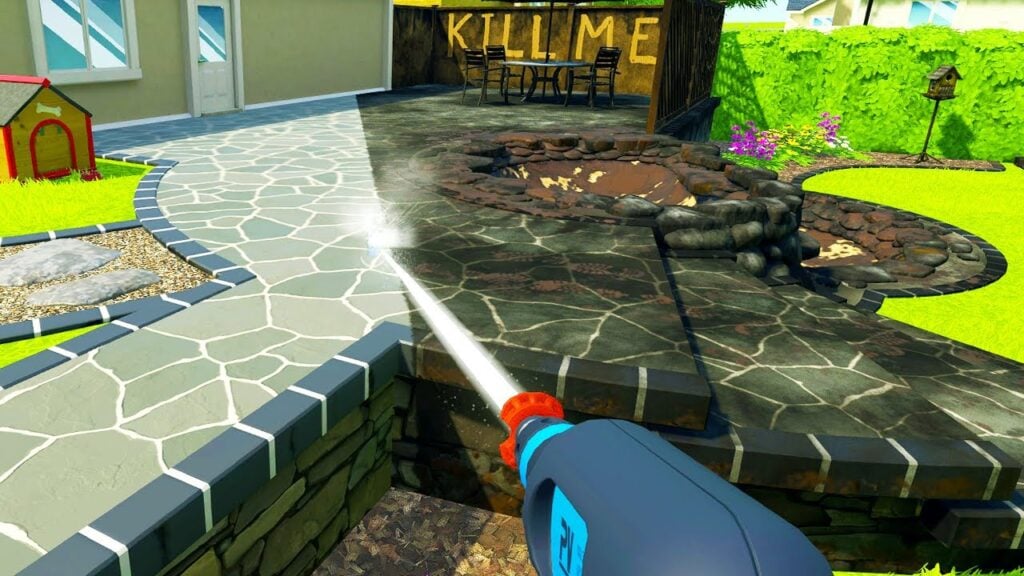
Millions of people will finish work this week, close their laptops, and… go straight back to work. As strange as it sounds, there is an ever growing genre of video games in which players go about performing arguably menial tasks for enjoyment. Some will spend the evening hosing grime off a virtual patio in PowerWash Simulator, renovating their digital homes, or managing simulated farms; whilst others will fire up Grand Theft Auto (GTA) VI, get behind the wheel, and, well, spend a perfectly agreeable half-hour doing the very thing they complained about on the way home – fighting traffic (admittedly, the radio in Vice City has its advantages). Either way, video game escapism has a rather ironic penchant for resembling the mundanity of the life it is supposed to be escaping.
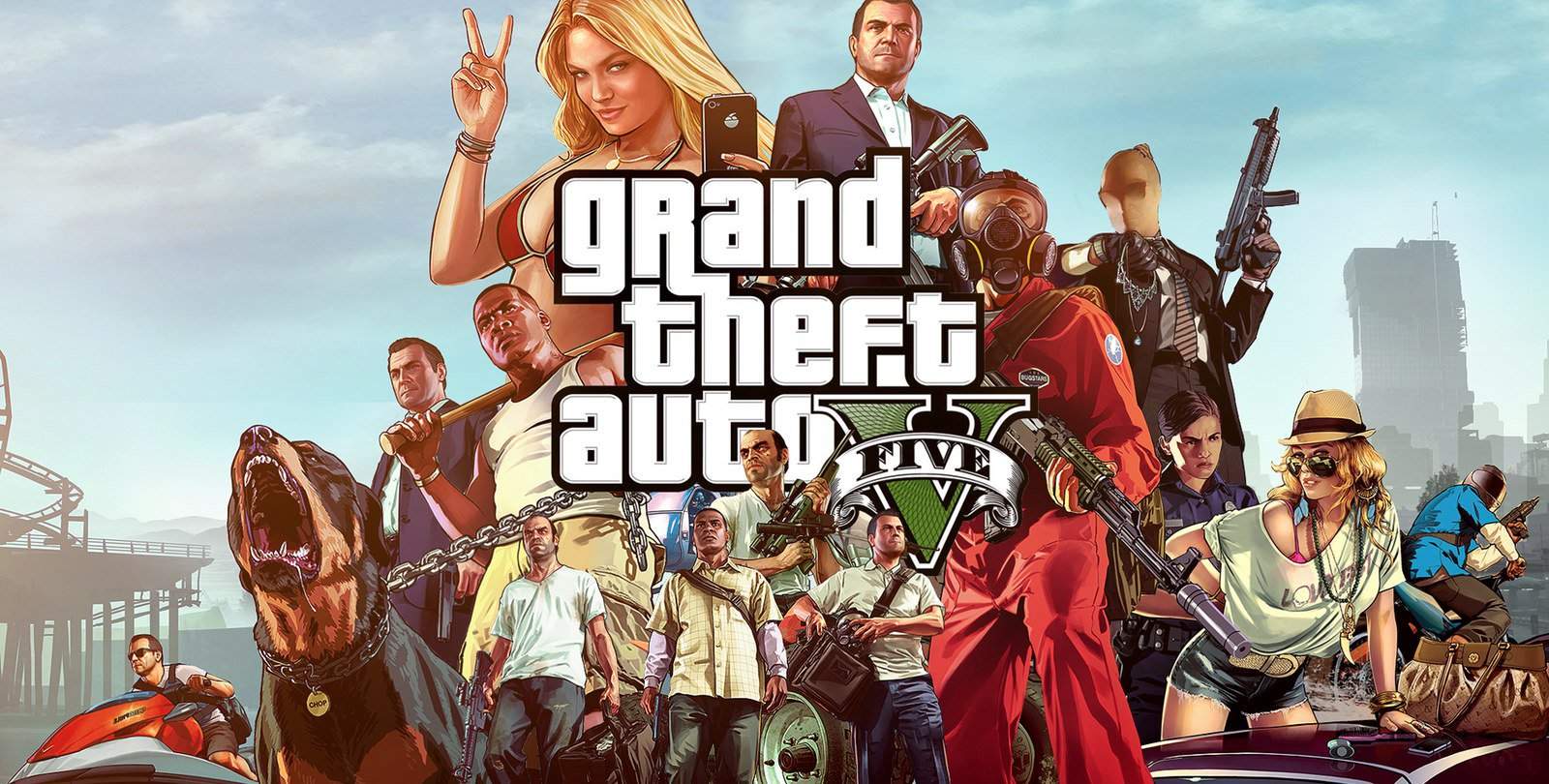
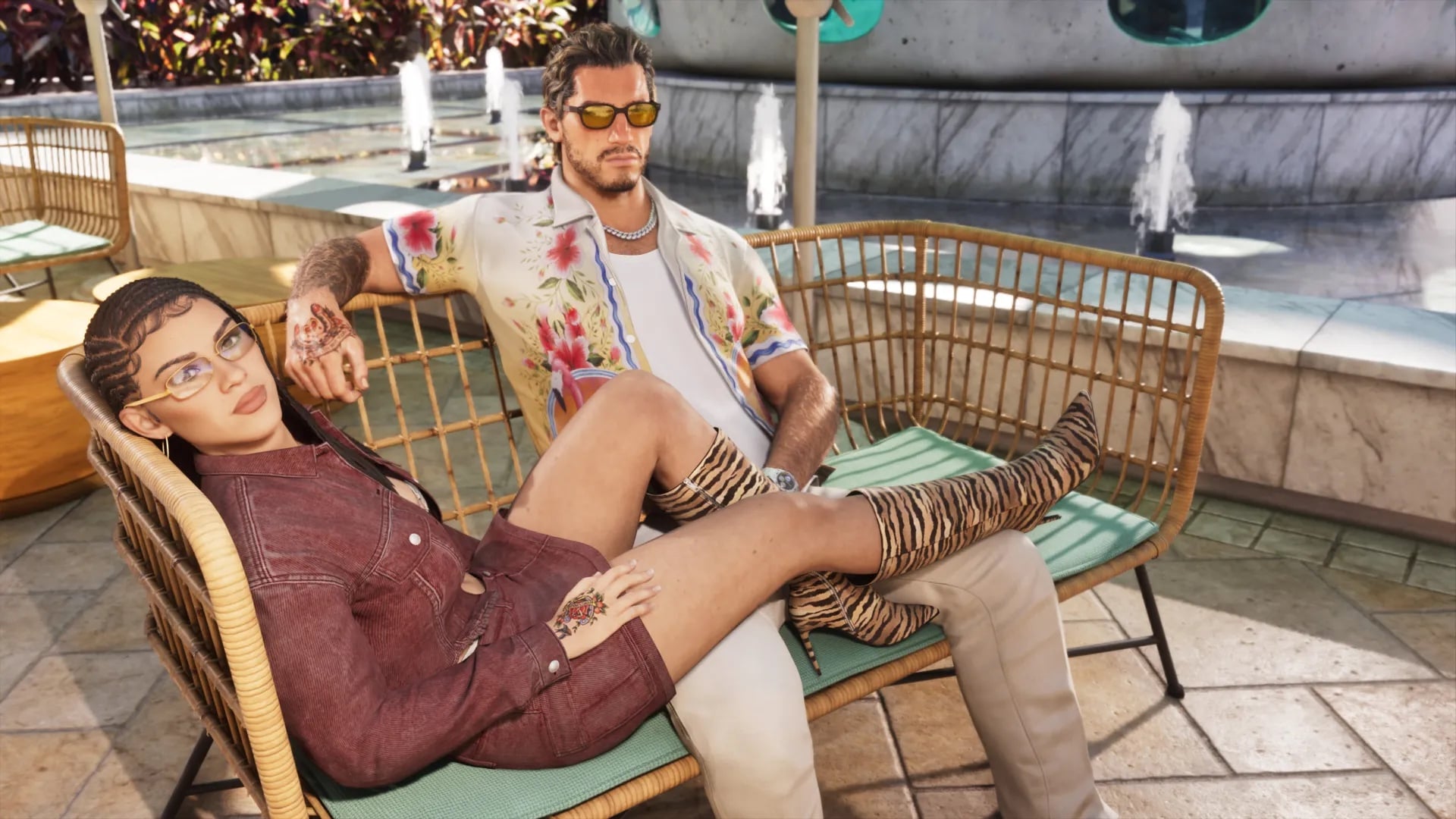
More than a decade after Grand Theft Auto V placed the lives of three career criminals in the hands of players in what was, at the time, one of the most realistic digital cityscapes available; Rockstar Games has handed over the keys to Vice City once again. Anyone trying to understand the appeal of the series could do worse than spending a brief moment on golfing, fishing or watching television (everything the game allows players to do, and then some). This alone should give anyone pause, for it stands to reason how adults – with already limited time – would choose to purchase GTA VI, not for the story, action or possibility of cancel culture worthy gameplay; but merely to sit down and elect to spend the afternoon working on Lucia or Jason’s short game, home improvement skills, or how they take their coffee in the morning. Where, exactly, is the escape in any of this?

A Crime Game Learns to Dawdle
GTA VI is finally here, and the launch reviews suggest Rockstar has built an entire game around this very impulse. Perhaps most surprisingly, is how many reviews tout how the latest GTA actually has more Red Dead Redemption 2 DNA than Rockstar initially let on. GTA VI, then, merges the slower pace and slice-of-life mechanics that have made Red Dead unforgettable, with the wondrous urban sprawl of its incredibly popular predecessors.
In this vein, Jason goes to the gym; Lucia, a button-press away, might be watching television; both can put on weight, get tired, and catch a bus running to a specific timetable. In addition to choosing how the characters take their morning coffee, there are other more simulation like aspects, such as fuelling the car, fishing and keeping a general air of cleanliness (something passers-by will mention). The result is a title preferring gamers take it slow, versus rushing in to cause absolute chaos. This makes sense given how the game is reportedly the most expensive game ever made. Clearly Rockstar wants players to proverbially see, feel, taste and enjoy the fruits of its decade long labour; and the excitement to do exactly this – no matter how menial – is palpable.
The Pleasure of a Clean Driveway
The banality of the mundane in video game format is utterly fascinating. In PowerWash Simulator, for example, running the nozzle over a single paving stone reveals its original colour in one clean stripe; there is a percentage in the corner of the screen for anyone who appreciates a little recognition, and a particularly satisfying ding when a whole section comes up spotless. A real driveway offers much the same transformation, although it takes considerably longer to get the equipment ready, to then put it all away at the end, and somebody invariably ends up a lot wetter than they would like to be once done. What the game supplies is a job with visible progress, a definite end and no consequence for abandoning the job halfway through. After a working day in which the reward for answering an email was, well, yet another email; the appeal of video game escapism requires little explanation.
To better understand why gamers enjoy power washing – at least in this example – researchers at the Oxford Internet Institute had the rather lovely idea of asking players how they felt whilst they were doing it. Working with developer FuturLab, they collected 162 325 mood reports from 8 695 players and found the average mood about three and a half points higher, on a hundred-point scale, during play than before it (most of the rise came within the first fifteen minutes). The players began at roughly 75 out of 100 (hardly a population in crisis), nobody was asked why they had sat down to play, and without a comparison group the study cannot say the game caused the lift. What it records is a small, quick and very ordinary pleasure – which is all a clean driveway would ever promise.
Two Saturdays in Vice City
Clean driveways aside, it only takes two Saturdays in Vice City to fully explain the stakes of why video game escapism is so important to the overall gaming experience. On the first, a player takes the long way along the coast because a good song has come on and, for once, nobody needs them anywhere. On the second, the same player takes another lap because there is a message on their real phone they have been putting off answering. From the other end of the couch, both evenings look much the same. From behind the controller, however, the difference is rarely in doubt, and most people could name the exact moment a perfectly enjoyable drive became an excuse to postpone a difficult conversation.
Frode Stenseng, a psychologist at the Norwegian University of Science and Technology, has names for both impulses. His 2021 study with Jonas Falch-Madsen and Beate Wold Hygen calls the desire to lose oneself in an enjoyable experience ‘self-expansion’, and the desire to keep unwelcome thoughts at bay ‘self-suppression’. Among 126 dedicated gamers, the first went hand in hand with positive experiences of play; whereas the second overlapped substantially with the symptoms of gaming disorder. To be fair, one unanswered message says very little in the grand scheme of things. However, it does become a different proposition when another lap is how every difficult conversation ends, and a game with more than 600 shops to browse in Vice City, has a great many laps to offer.
The wider evidence on video game escapism has room for gamers who partake in both Saturdays, and is weaker than either camp tends to admit. A survey of 609 postgraduate players of open-world games, from Imperial College London and the University of Graz, linked switching off in an open world to relaxation. A faint link, to be fair, but still a link. A review of 36 studies in Frontiers in Psychiatry found a somewhat less than comfortable pattern, in which people who named escape as a reason for playing tended to report poorer mental health (obviously someone already struggling has every reason to seek relief in a game, which leaves the direction of travel just as unclear). The lack of a foregone conclusion – either way – allows for a level of uncertainty requiring more research into the topic.
With that said, a detail I particularly like comes from Stenseng’s later work with 227 recreational runners, among whom running for enjoyment was associated with better wellbeing, whilst running to shut out difficult feelings had the stronger association with exercise dependence. The pattern, in other words, owes nothing to screens or games. Two friends might each describe how they cleared their heads after work – one with a ten-kilometre run, the other with a drive in GTA VI – and most listeners would congratulate the first before it occurred to them to ask how either was feeling.

What Follows Players Out of GTA VI
Naturally, the reason GTA has attracted decades of scrutiny, and why video game escapism still has to defend itself, has more to do with what players can do when not golfing, fishing, exercising, keeping clean or drinking coffee. On actual violence the verdict is in: the American Psychological Association (APA) updated its resolution in 2020 to say the evidence for violent games causing violent behaviour is insufficient, and its president called the attribution scientifically unsound. What survived was a “small, reliable association” with milder outcomes such as yelling and pushing, and even this is contested ground.
A registered report by Przybylski and Cardiff University’s Netta Weinstein, published in 2019, questioned 1 004 British teenagers and their carers, and found no association between violent play and aggression. Six years later, Andreas Miles-Novelo and Craig Anderson rescored the same public data, adjusted the statistics, and found a small association. Anderson’s own earlier analyses had long supported the link, so the rematch was hardly a surprise. After all, it would be awfully convenient for those of us fond of games to cite the first paper and leave things there. With that said, my own reading is duller: an effect which appears and vanishes with the scoring method is a poor foundation for a moral panic.
Video games have long been under the eye of scrutiny, yet one need only to look at sports for better understanding of how these points can be made with real blood. Boxing and Mixed Martial Arts (MMA) sell actual violence, and when economists tracked the arrival of The Ultimate Fighter on American television in 2005, areas with more exposure to the show saw crime fall – assault most visibly – for years afterwards. Interestingly, the solitary wrinkle comes from a sport where punching is not ‘the name of the game’. David Card and Gordon Dahl found how an unexpected home defeat in the National Football League (NFL) was followed by a 10 per cent rise in police reports of at-home violence by men against their wives and girlfriends. Both studies concern sports audiences, and their findings belong there. However, they do support what many gamers have long suspected about games: what happens on the screen matters far less than the state of the person watching it.
The Honest Case for Video Game Escapism
Somewhere in Vice City tonight, a player has driven straight past the next mission because there are still two minutes left on a song. There is something generous about a game of this scale being perfectly willing to let those two minutes be the whole point, and something beautifully telling in Rockstar using the lessons that shaped its darling cowboy to influence how enjoyment may be had when a criminal is allowed to be idle.
Perhaps on a good night, after the controller goes down, the message gets answered and the dishes get done; or on a bad one the car circles the block again, its driver wishing it felt quite as easy to stop as it had been to start. The research cannot tell those two evenings apart from the outside, and neither can a sales chart, a review score or an age rating. For all the attention paid to what people might get up to in GTA VI, the question worth asking about video game escapism is a rather ordinary one, and it applies equally to the power washer, the golfer, the reader and the fight fan: how does it make you feel when all is said and done?
Sources/further reading
- ABC News – Grand Theft Auto VI launches to rave reviews (19 November 2026)
- University of Oxford – New study reveals positive mood changes during video game play (2024)
- Vuorre et al. – Affective Uplift During Video Game Play, Games: Research and Practice (2024)
- Anto et al. – Open-World Games’ Affordance of Cognitive Escapism, Relaxation, and Mental Well-Being, Journal of Medical Internet Research (2024)
- American Psychological Association – APA Reaffirms Position on Violent Video Games and Violent Behavior (2020)
- Przybylski and Weinstein – Violent video game engagement is not associated with adolescents’ aggressive behaviour, Royal Society Open Science (2019)
- Miles-Novelo and Anderson – The Question of Violent Video Games and Aggression, Aggressive Behavior (2025)
- Lindo, Swensen and Waddell – Effects of violent media content: Evidence from the rise of the UFC, Journal of Health Economics (2022)
- Card and Dahl – Family Violence and Football, Quarterly Journal of Economics (2011)
- Marques et al. – Escaping through virtual gaming: a systematic review, Frontiers in Psychiatry (2023)
- Stenseng, Falch-Madsen and Hygen – Are There Two Types of Escapism?, Psychology of Popular Media (2021)
- Stenseng et al. – Running to get “lost”?, Frontiers in Psychology (2023)

Owner, founder and editor-in-chief at Vamers, Hans has a vested interest in geek culture and the interactive entertainment industry. With a Masters degree in Communications and Ludology, he is well read and versed in matters relating to video games and communication media, among many other topics of interest.
- Hans Haupthttps://vamers.com/author/hanshaupt/

- Hans Haupthttps://vamers.com/author/hanshaupt/

- Hans Haupthttps://vamers.com/author/hanshaupt/

- Hans Haupthttps://vamers.com/author/hanshaupt/

- Hans Haupthttps://vamers.com/author/hanshaupt/

- Hans Haupthttps://vamers.com/author/hanshaupt/

- Hans Haupthttps://vamers.com/author/hanshaupt/

- Hans Haupthttps://vamers.com/author/hanshaupt/